
Slim down by saving carbs for last: How eating order matters
 Did you know that the order in which you eat your food can impact your weight, energy levels, and blood sugar? Researchers have uncovered a simple yet powerful trick to optimize your meals: eat your carbs last.
Here’s how it works:
When you eat fiber, healthy fats, and protein before carbohydrates, your body slows down the absorption of sugars. This helps reduce your blood sugar spikes, keeps you fuller longer, and supports your weight management. Plus, maintaining steady blood sugar levels can improve your focus and energy throughout the day.
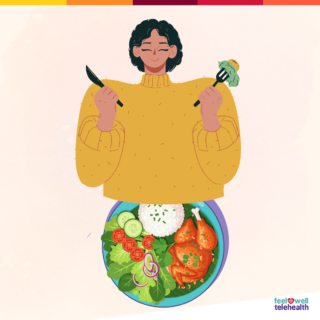
For example, start your meal with a salad loaded with leafy greens, colorful veggies, and a sprinkle of nuts or seeds. Follow that with a protein-packed main course like lean meat, grilled chicken, fish, or tofu. Save bread, rice, potato, or pasta for the end. It’s that simple!
Why does it matter?
When carbs are the first thing you eat, they’re absorbed quickly into your bloodstream, causing a rapid increase in blood sugar levels.
This sudden spike prompts your body to release a large amount of insulin to bring your blood sugar back down. These frequent spikes and drops can lead to energy crashes, increased hunger, and stronger cravings for sugary or starchy foods. Over time, they can increase your risk of insulin resistance, make weight management more challenging, and contribute to various inflammatory diseases.
By saving carbs for last, you give your body time to process fiber, healthy fats and protein first, which slows the absorption of carbohydrates and sugars. It helps stabilize your blood sugar levels and reduces the likelihood of overeating later.
Sink-and-pipe analogy:
In Glucose Revolution, author Jessie Inchauspé uses a sink-and-pipe analogy to explain how the stomach and small intestine process food. Anything you eat lands in your sink, then flows through to your pipe, where it is broken down and absorbed into your bloodstream. When carbs (starches or sugars) are eaten first, they quickly move from the stomach (“sink”) to the small intestine (“pipe”) and break down into glucose, leading to a sharp glucose spike. The more carbs you eat and the quicker you consume them, the more intense the glucose spikes.
Eating fiber first slows the digestive process as fiber moves through your system unchanged, doesn’t convert into glucose, and even helps slow the breakdown of other foods into glucose molecules. High-fiber, plant-based proteins like tofu, nuts, lentils, chickpeas, and beans are excellent choices. Their soluble fiber and water content help to slow digestion, as they take longer to break down.
Ready to give it a try?
Start with your next meal! This small change could make a big difference in how you feel and look.
Achieving better health is easier with a plan that works for you. I’m here to help you develop one tailored to your unique preferences and goals. Click here to schedule your free visit.